
Forecast to production plan
One connected plan
01
Forecast demandEvery SKU × every week
02
Generate the optimized planDemand × stock × capacity
03a
Production quantitiesWhat to make each week
03b
PO recommendationsWhat materials to buy · when to order
AI planning for manufacturers and wholesalers
Turn demand into a weekly plan you can actually run.
Foreluma forecasts what you will sell and builds one approved weekly plan—what to produce, what materials to buy and what to schedule next.
✓Live in under a week
✓Works with your Excel exports
✓Your team stays in control
Why it matters
Better planning should show up in the operation.
Foreluma connects demand forecasting with constrained optimization to improve the measures your planning team is judged on.
accuracy
expiry
costs
tied up
◎Measured against your operation. We establish your baseline during onboarding and track improvement from there.
Demand to decision
One demand picture. Every decision connected.
Foreluma shows what every SKU is likely to sell, why that number moved and what it means for production and purchasing. The evidence stays connected until your planner approves the week.
SKU 1842 · W38Lemon yoghurt · 4 × 125 g
DEMAND CHANGED+27%Promotion + seasonal peak
Forecast 1,620 units
THE WEEKLY PLAN RESPONDS
Make more in W38
Protect material availability
Still fits the week
✓
ONE CONNECTED REVIEWThe planner sees every consequence before releasing the week.
Approve planSee the whole week move together.
When demand changes, Foreluma shows the consequence for production batches, purchase timing and shared capacity—before your planner approves the new week.
Follow the planning loop ↗See what moves demand.
For each SKU and week, Foreluma separates the historical baseline from promotions, seasonality, calendar effects and planner knowledge—so every change can be challenged before it shapes the plan.
SKU 1842 · W38Why demand moved
EXAMPLE DRIVER VIEWPromotion+260
Seasonal peak+120
Public holiday−80
Historical baseline 1,280→Forecast 1,620
Build a plan that fits reality.
Demand meets stock, recipes, supplier timing, shelf life, batch rules and shared capacity before Foreluma recommends what to buy and make.
W38 · LEMON YOGHURT1,620 units needed
180 from stock1,440 to make · 6 batches
Materials and capacity checkedFeasible plan ✓
Approve one plan everyone can use.
Foreluma recommends. Your planners review the evidence, adjust where judgement matters and release the version purchasing and production will act on.
The planning core
Forecast first. Then build the best possible production plan.
Scheduling matters, but it can only execute the decisions made upstream. Foreluma puts most of its intelligence where the highest-value questions live: what demand is coming, what should be produced and what materials that plan requires.
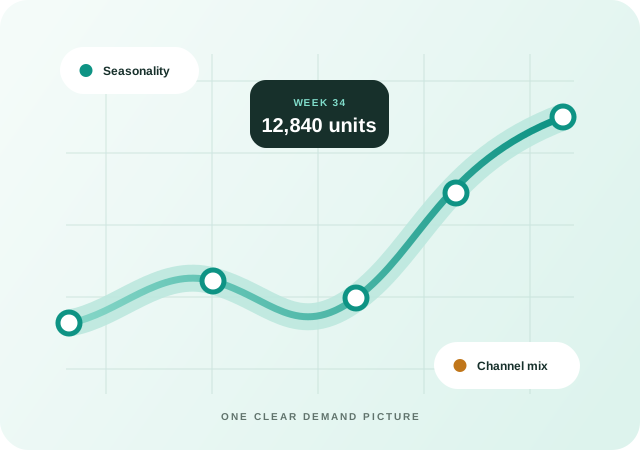
01 · Demand forecasting
Forecast every SKU—and the events that move it.
Foreluma learns how each product sells, brings in promotions, public holidays, school breaks and seasonal patterns, and produces a weekly forecast your planner can understand, adjust and approve.
- Promotions, holidays and school breaks reflected in demand
- Seasonality and other demand drivers visible by SKU
- Stockout corrections and planner approval before planning
02 · Production planning
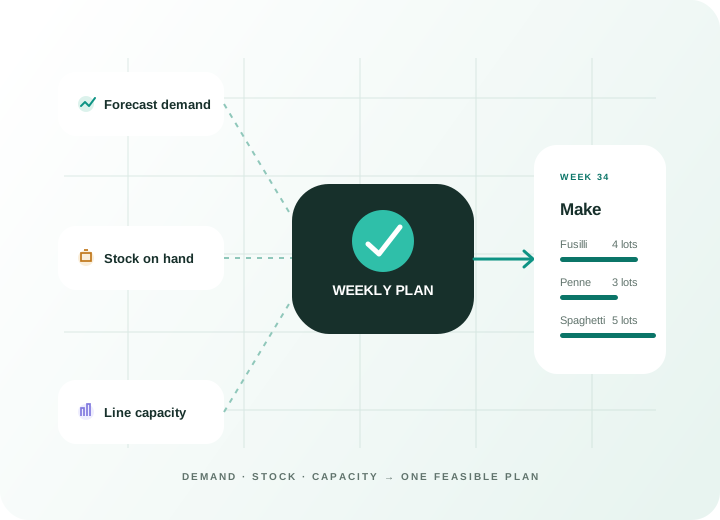
Decide what to make, when and in what quantity.
Foreluma balances expected demand against finished stock, production batches, line capacity, shelf life and committed work to create a weekly plan the factory can actually run.
- Weekly production quantities and batches by finished SKU
- Shared bottleneck capacity across products and lines
- Protect customer service while avoiding unnecessary cost and stock
See the weekly planning run
From scattered source data to one week everyone can run.
Foreluma connects the information you already have, forecasts demand at SKU level, and turns that demand into practical production and purchasing decisions—with the evidence behind every number.
The Foreluma planning run
01 / 04
01
ConnectYour data, structured once
Connecting source dataScroll to continue
Start with the data you already use.
Send the Excel exports your team works with today or connect Foreluma directly to your ERP. We map sales history, stock, open orders, recipes, supplier rules and capacity into one planning model.
- Excel, CSV or ERP integration
- SKU history and stockout corrections
- Recipes, lead times and production constraints
Forecast every SKU—and explain what moves demand.
Foreluma learns how each product sells and accounts for the events that change demand—promotions, public holidays, school breaks and seasonal peaks. Planners can see the drivers, add local knowledge and approve the forecast before it shapes production and purchasing.
- Promotions, holidays and school breaks built into the forecast
- Seasonality and demand drivers visible by SKU
- Planner adjustments captured before the weekly plan
Turn possible demand into a feasible plan.
The optimizer weighs demand uncertainty against finished stock, recipes, supplier timing, batch rules and shared capacity. It searches for the best service and cost outcome the operation can actually execute.
- Balance service, inventory and operating cost
- Respect materials and bottleneck capacity
- Keep every recommendation explainable
Give production and purchasing one answer.
The same approved demand picture becomes weekly production quantities and time-phased PO recommendations—what to make, what to buy, how much and when.
- Production quantities by SKU and week
- Purchase recommendations with order-by dates
- Planner approval and a complete decision trail
Detailed scheduling
Turn “what to make” into exactly what runs next.
The weekly plan gives you quantities. Foreluma’s scheduling layer turns those lots into a practical sequence for each machine and shift — with the constraints that make your factory real.
Assign every batch to the right machine
Place work only on machines that can make the product, using the time each machine really needs.
Sequence around changeovers
Cluster setup families and respect sequence-dependent cleaning or changeover time.
Work inside real shift calendars
Schedule only inside available windows, carrying longer jobs into the next working period.
Reschedule without rewriting the week
Keep completed and near-term work in place, then rebuild the rest around a breakdown or rush order.
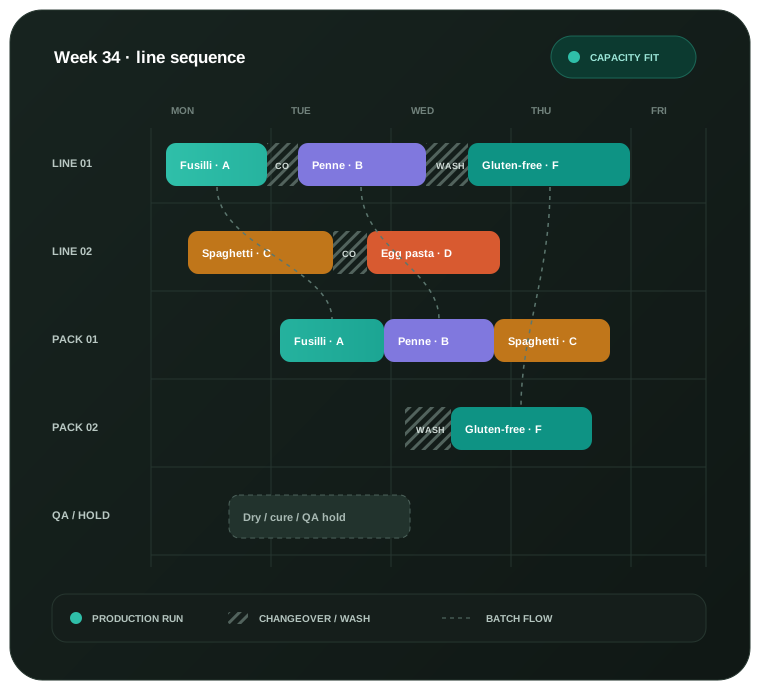
WEEKLY QUANTITIES→EXECUTABLE LINE SEQUENCE
Your new Monday morning
The planning run finishes before the week begins.
Foreluma recalculates the connected plan on fresh data, so Monday starts with review and action — not half a day rebuilding the workbook.
Show me the weekly loopFresh sales arrive
Exports from your ERP or the same Excel files you already use.
The whole plan recalculates
Forecasts, purchase recommendations, production quantities and line sequence.
Your teams review one answer
Adjust where judgement matters, approve and move the week into action.
Build at your pace
Start with forecasting.
Add depth when you need it.
One foundation, modular by design. Bring in purchasing, production, inventory or detailed scheduling without rebuilding the data underneath.
Core
↗
Demand forecasting
Weekly forecasts by product and customer group, proven against your own history.
Plan
↗
Procurement
Ingredient recommendations with delivery times, pack sizes and order-by dates.
Plan
↗
Production planning
Weekly quantities per SKU, balanced against stock, demand, capacity and service.
Optimize
↗
Inventory
Right-size ingredients and finished goods while protecting availability.
Execute
↗
Detailed scheduling
Machine assignment, sequencing, shifts, changeovers and exception-aware rescheduling.
Ask
↗
AI assistant
Ask questions about your forecast, stock and plan with the numbers behind every answer.
Straight answers
Questions factories ask us.
Still wondering whether Foreluma fits your factory? Bring us your data and your hardest planning week.
We run everything in Excel. How hard is the switch?+
Excel is exactly what Foreluma is built to meet. Send the sales exports you already produce; we map SKUs, sales categories and recipes during onboarding. You can keep exporting results to Excel whenever you need.
How do you prove the forecast is accurate?+
We backtest against your own history, so you can see forecast versus actuals for your SKUs before you commit. Accuracy stays visible as the models retrain each week.
Does the detailed scheduler replace the planner?+
No. It creates a constraint-aware starting sequence and flags capacity issues. Your planner can freeze near-term work, adjust priorities and regenerate the remaining horizon.
Do we lose control of purchasing or production decisions?+
No. Foreluma recommends; your team decides. Forecast overrides, purchase quantities, production lots and schedules remain reviewable before anything is approved.
Do we need an ERP integration project?+
No. Foreluma can start from spreadsheet exports and add deeper integration later. There is no server to install and no rip-and-replace project.
See it on your own data
Bring us one messy planning week.
We will show you how Foreluma turns your sales history, recipes and constraints into a plan your team can use.