
← Foreluma platform
Production planning
Make the right quantity, in the right week.
Turn approved demand into a feasible weekly production plan that respects batches, finished stock, line capacity, shelf life, fixed commitments and the service levels that matter.
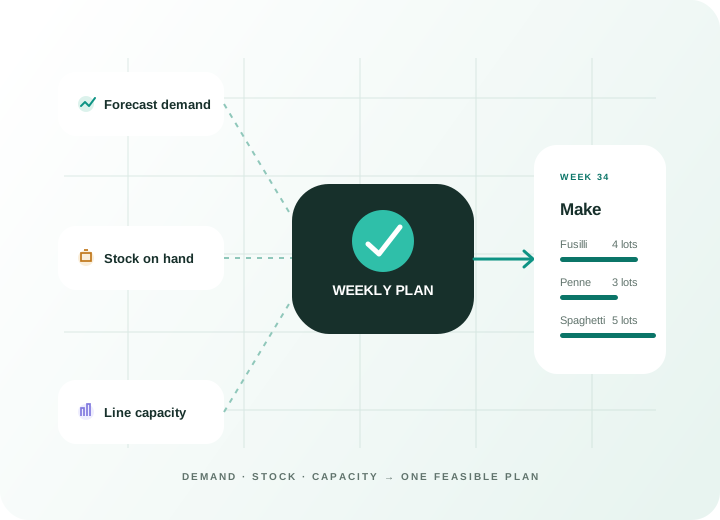
Questions answered
Move from expected demand to a plan the factory can commit to.
Foreluma brings demand, stock and factory limits together, so every team works from one practical answer.
What should we produce each week?
See the finished quantity and whole number of batches needed for every product.
Which customer demand should we protect first?
Make priorities clear when there is not enough stock or factory time to fulfil everything at once.
Where will capacity become tight?
See pressure on shared lines and bottlenecks early, while there is still time to change the plan.
What happens to stock and waste?
Follow finished stock week by week and avoid producing so early that cash is tied up or products expire.
Production clarity
One plan across demand, stock, capacity and materials.
The forecast says what customers may order. The production plan turns that demand into quantities the factory can actually make.
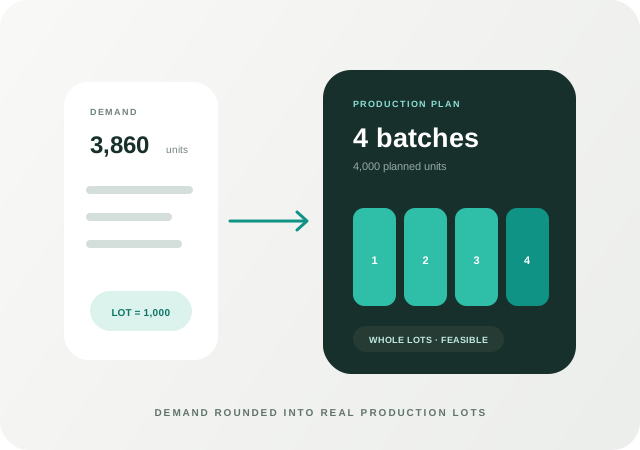
01 · Quantities
Plan in real production batches.
Turn approved demand into whole batches for every product, while keeping work already promised to the factory.
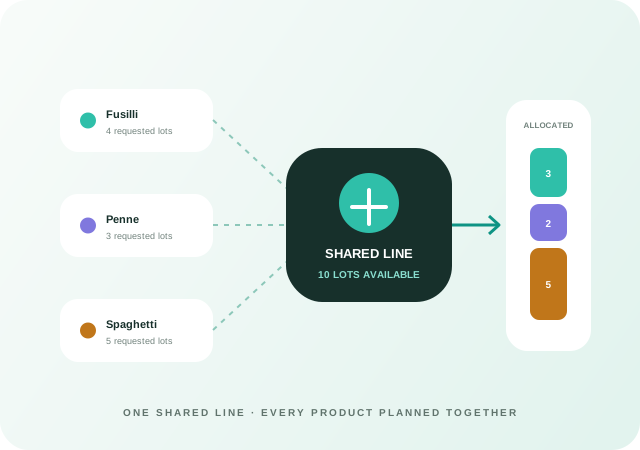
02 · Capacity
Give every product a fair share of real capacity.
Plan shared lines across all products together, so the same factory time is never promised twice.
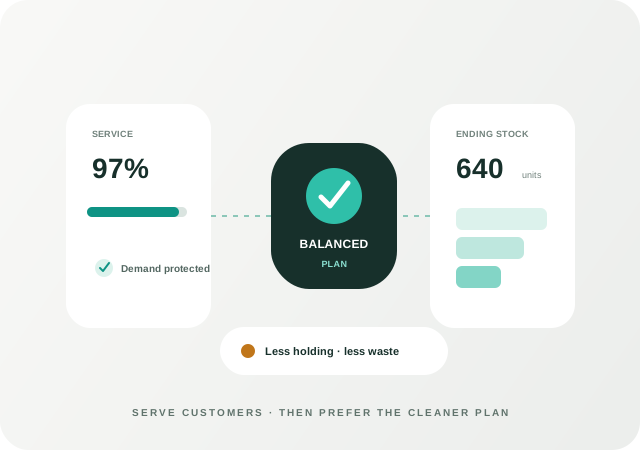
03 · Balance
Serve customers without building unnecessary stock.
Protect important orders first, then prefer the plan that leaves less stock sitting, ageing or going to waste.
The production planning run
From approved forecast to weekly production orders.
Foreluma considers the whole factory plan before scheduling decides the exact machine sequence.
Bring in approved demand
Use the agreed forecast, current stock, existing commitments and available factory time.
Apply the real boundaries
Respect batch sizes, materials, shelf life, production time and shared line limits.
Resolve the trade-offs
Choose weekly quantities that protect customer service without creating unnecessary cost or stock.
Release one approved plan
Share production quantities, shortages, expected stock, capacity use and material needs.
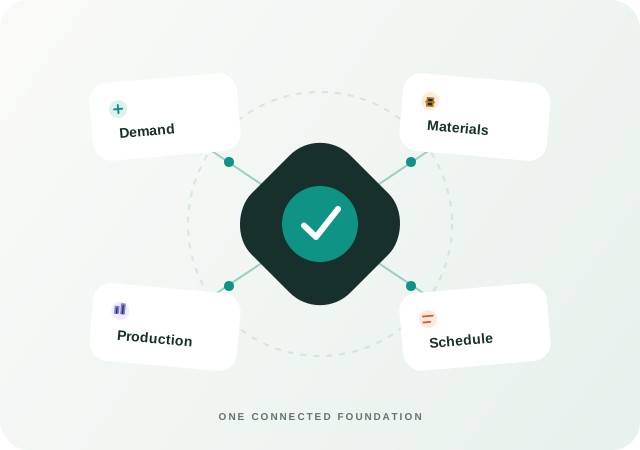
Connected outputs
The production plan drives every next decision.
Once weekly quantities are approved, the same answer determines ingredient demand, expected stock and which batches the scheduler must place.
Production ordersWeekly units and batches for every finished product.
Material needsIngredients and packaging needed, after available stock is counted.
Capacity warningSee overloaded weeks and bottlenecks before they become urgent.
Ready for schedulingApproved batches, due weeks and the lines that can make them.
Production FAQ
A plan built for review, not blind automation.
Foreluma makes the important trade-offs visible so your team can approve the answer with context.
Does production planning include exact machine times?+
No. This layer decides what and how much to produce by week. Detailed scheduling takes those approved batches and decides the machine, sequence and exact time.
Can the plan prioritise customer service over margin?+
Yes. Your team can choose which outcome matters most. Foreluma then shows the effect on fulfilled orders, shortages, production cost, purchasing, stock and waste.
What happens to production already in progress?+
Committed work keeps its factory time and materials. The finished goods expected from work already underway are also included, so they are not planned twice.
Plan on your own constraints
See what your factory should make next week.
Bring your forecast, batches, line capacity and stock. We will show the production plan and every trade-off behind it.